olivettherapy

Category: General

  • Universal Key Fob Programming

    In today’s world, key fobs have become an essential accessory for vehicle access. They not only provide convenience but also enhance security. With the rise of universal key fob programming, we can better understand how to manage these small yet powerful devices. In this text, we will explore the intricacies of key fobs, how programming works, and the best practices for maintaining your key fob effectively. Let’s jump into the details.

    Understanding Key Fobs: An Overview

    Key fobs, often referred to as remote keyless systems, are small devices that allow us to unlock doors, start engines, and secure our vehicles without using traditional keys. Their convenience is undeniable, and they come equipped with various features depending on the manufacturer and model of the vehicle.

    Types of Key Fobs

    Key fobs can generally be categorized into two types: basic key fobs and smart key fobs.

    1. Basic Key Fobs: These models typically enable remote locking and unlocking of doors. They rely on infrared or radio waves to communicate with the vehicle.
    2. Smart Key Fobs: More advanced technology allows these fobs to interact with the vehicle even when they are inside our pockets or bags. They offer keyless entry and ignition, enhancing the overall user experience.

    How Key Fob Programming Works

    Programming a key fob involves syncing it with the vehicle’s onboard system. Generally, this process stores the fob’s unique electronic signal within the vehicle’s software, enabling the vehicle to recognize the fob when we try to use it. This process can vary significantly between different manufacturers and models, but there are common steps that unify the programming process.

    Key fobs operate using radio frequency signals. When we press a button on the fob, it sends a signal to the vehicle, which then either allows access or denies it, based on whether the fob is programmed correctly. Understanding this communication is essential for troubleshooting any programming issues.

    Steps to Program a Universal Key Fob

    Programming a universal key fob may seem daunting, but with the right guidelines, we can carry it out efficiently. Here are the steps we generally follow:

    1. Gather Necessary Information: Before we start, it’s helpful to have the make and model of our vehicle and the universal key fob’s manual, if available.
    2. Insert the Key into the Ignition: For most vehicles, insert the key and turn it to the ‘on’ position without starting the engine.
    3. Locate the Programming Button: This is often found in the vehicle’s interior. In some cases, it may be necessary to use the door locks.
    4. Press the Programming Button: We usually need to press the button a certain number of times to enter programming mode, this can vary.
    5. Program the Key Fob: Press any button on the new key fob. The vehicle will usually respond with lights flashing or a beep to indicate successful programming.
    6. Exit Programming Mode: After programming, ensure that we turn the ignition off, and test the fob to verify that it’s working as expected.

    Common Issues and Troubleshooting

    Even with the best intentions, programming our key fob may not always go smoothly. Here are some common issues we might encounter, along with troubleshooting tips:

    • Key Fob Not Responding: Ensure that the battery in the key fob is charged. If low, replace the battery and try programming again.
    • Error Signals: If our vehicle indicates that the key fob is not recognized, check to make sure we followed all programming steps accurately. Consult the vehicle manual if necessary.
    • Limited Range: If the key fob works only at a close distance, it may be time to replace the battery. Strong, fresh batteries enhance signal strength.

    If all else fails, we should consider seeking help from a professional locksmith or the dealership. They have specialized tools and knowledge that can aid in solving complex issues.

    Best Practices for Key Fob Maintenance

    To ensure our key fob remains in excellent working condition, we recommend adopting these best practices:

    1. Regular Battery Checks: Periodically check the battery life and replace it when necessary, ideally before it runs out completely.
    2. Keep it Dry: Moisture can damage electronic components, so keep our fob away from water or harsh conditions.
    3. Avoid Dropping: Treat the fob with care, as dropping it can lead to internal damages. We should consider using a protective case for added safety.
    4. Use the Right Fob: Ensure that we are using fobs compatible with our car’s make and model to avoid programming issues.
    5. Regular Cleaning: Wipe down the exterior regularly to remove dirt and grime that can interfere with button functionality.

    Ensure Our Vehicles Remain Accessible And Secure

    Universal key fob programming may initially seem complicated, but by understanding the types of key fobs, the programming process, and best maintenance practices, we can ensure our vehicles remain accessible and secure. It’s all about making the most of our technology while keeping it functional and in top shape. If we encounter issues, we can always rely on professional help, but with the right knowledge, we can often troubleshoot and solve minor problems on our own. Happy programming.


  • Adobe 3D Design Software: Unlock Your Creative Potential with Easy-to-Use Tools

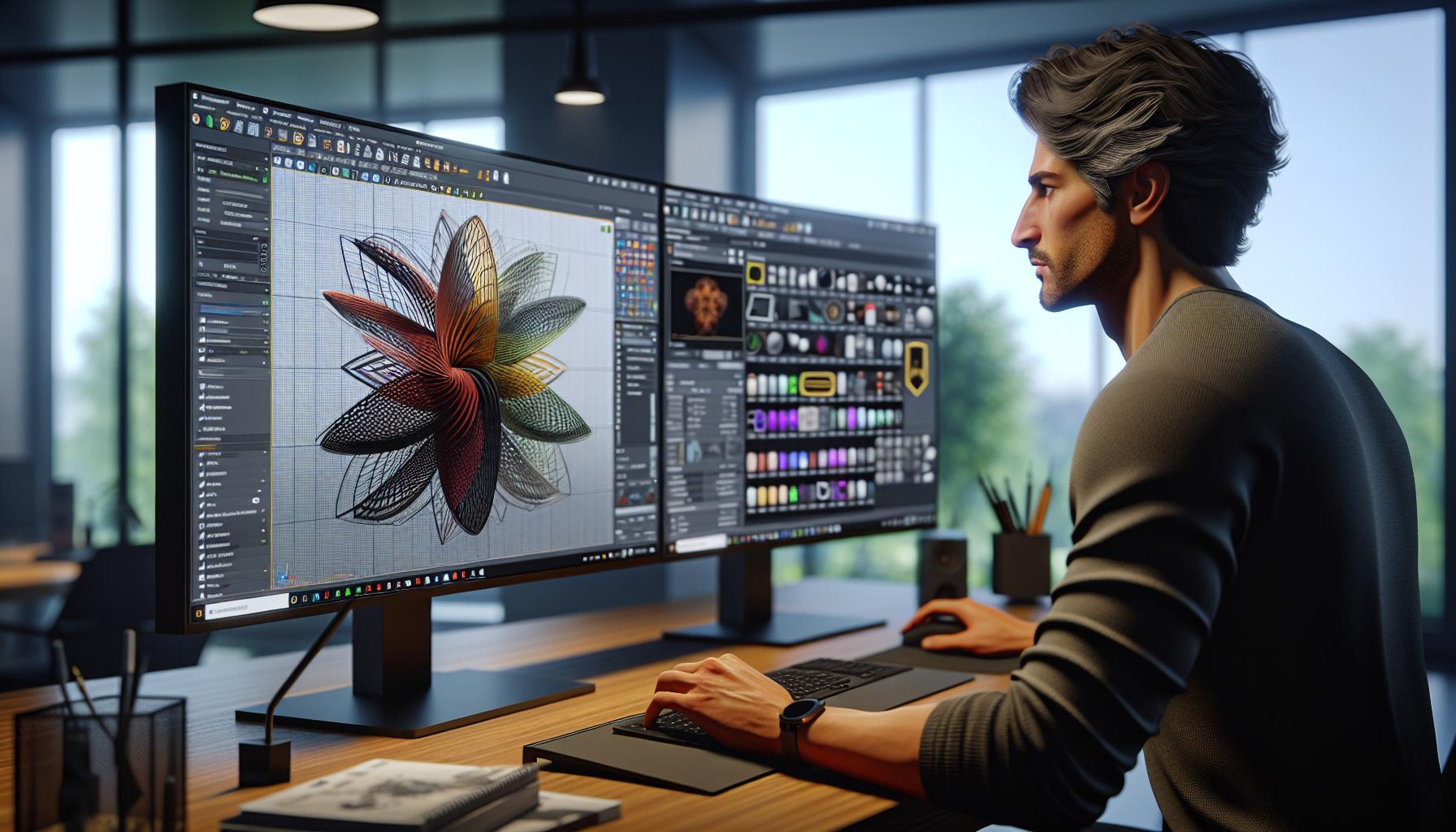
    In a world where creativity knows no bounds, Adobe’s 3D design software is like a magic wand for artists and designers alike. Imagine transforming your wildest ideas into stunning visual masterpieces with just a few clicks. Whether it’s for a blockbuster film, a jaw-dropping video game, or that quirky art project your friends will never stop talking about, Adobe has got the tools to make it happen.

    But wait—before you dive in headfirst, let’s be real. Mastering 3D design can feel like trying to teach a cat to fetch. It’s a challenge, but with Adobe’s intuitive interface and powerful features, you’ll be crafting 3D wonders faster than you can say “rendering.” So buckle up, unleash your inner Picasso, and get ready to explore the exciting world of 3D design that Adobe has to offer.

    Overview of Adobe 3D Design Software

    Adobe’s 3D design software provides powerful tools for artists and designers. Users can create stunning visuals for various applications, such as films, games, and marketing materials. Key features include a user-friendly interface, enhanced modeling capabilities, and a comprehensive library of resources.

    Numerous applications fall under Adobe’s 3D design software umbrella. For instance, Adobe Dimension allows users to create high-quality 3D mockups. Users can combine 2D and 3D assets effortlessly. Moreover, Adobe Substance 3D Texturing enables professionals to design complex textures that enhance realism.

    Artists appreciate Adobe Aero for its focus on augmented reality. This tool allows creators to craft immersive experiences that blend digital assets with the real world. This aspect serves various industries, from education to marketing.

    User support and community engagement are significant benefits of Adobe products. Forums and tutorials offer valuable insights, making it easier for newcomers to learn. Many experienced users share their workflows and techniques, fostering a collaborative environment.

    Integration with other Adobe products stands out as a major advantage. Designers can seamlessly transfer files between applications like Photoshop, Illustrator, and After Effects. This interoperability streamlines the creative process and boosts efficiency.

    Continual updates ensure the software remains current with industry standards. Regular enhancements bring new features, address usability issues, and improve performance. These updates help users adapt to the ever-evolving landscape of design technology.

    Exploring what Adobe’s 3D design software offers can inspire creativity and innovation. Whether for professional projects or personal endeavors, it provides the tools needed to bring ideas to life.

    Features and Capabilities

    Adobe’s 3D design software offers an array of powerful tools that enhance creativity and streamline the design process.

    3D Modeling Tools

    The software features advanced 3D modeling tools that empower users to create intricate designs with precision. Users can manipulate shapes and structures easily, allowing for innovative design possibilities. Support for parametric modeling gives artists control over dimensions and proportions. Various geometric shapes and editable meshes serve as a foundation for building complex objects. Collaboration tools facilitate teamwork in design projects, enabling multiple users to work on the same model simultaneously.

    Texturing and Materials

    Robust texturing tools provide artists with the ability to create realistic surfaces and materials. Users can access an extensive library of textures that support customization, allowing for unique finishes on models. Shader controls enable detailed adjustments, enhancing the visual quality of 3D objects. The software also supports seamless integration with Adobe Substance 3D for creating complex materials. This functionality enables designers to apply intricate textures that transform simple models into eye-catching works of art.

    Animation and Rendering

    Animation capabilities within the software allow for the creation of dynamic actions and movements. Users can utilize keyframe animation to define motion paths for objects, providing flexibility in storytelling. Real-time rendering options enhance the visual experience, enabling immediate feedback during the design process. Tools for lighting and effects create immersive scenes and lifelike animations. Additionally, collaboration with Adobe Aero allows designers to visualize and present their animations in augmented reality, expanding creative opportunities.

    Comparison with Other Software

    Adobe’s 3D design software holds a competitive edge in various areas compared to other platforms like Blender and Autodesk. Its user-friendly interface appeals to beginners while offering advanced features for professionals.

    Adobe vs. Blender

    Adobe’s 3D design software excels in integration with other Adobe products, such as Photoshop and Illustrator, creating a seamless workflow. Blender, while powerful and open-source, can present a steeper learning curve for new users. Support for 3D modeling and animation in Adobe’s suite enables efficient project execution, whereas Blender lacks certain industry-specific resources. Additionally, the Adobe library provides ready-to-use assets that elevate design output quickly. Both platforms feature robust community support, yet Adobe’s extensive tutorials stand out for newcomers.

    Adobe vs. Autodesk

    Autodesk’s software often targets specialized fields like engineering and architecture. Adobe’s 3D design solution, however, caters more to artists focusing on visual storytelling and creative projects. Real-time rendering in Adobe’s suite allows users to visualize outcomes instantly, giving it an advantage for rapid iterations. Autodesk offers powerful modeling tools, yet its interface may feel less accessible. Collaboration features in Adobe’s software enhance teamwork, while Autodesk may require additional tools for similar functionalities. Each software serves its niche, but Adobe’s versatile applications appeal broadly to a diverse range of designers.

    User Experience and Interface

    Adobe’s 3D design software prioritizes an intuitive user experience, making complex tasks manageable for artists and designers.

    Learning Curve

    The software features tutorials and guided workflows that speed up the learning process. New users can find step-by-step instructions tailored to various tasks. Experienced creators benefit from advanced tips and techniques shared in community forums. Visual aids are abundant, simplifying grasping new concepts. Regular updates enhance usability, as Adobe addresses user feedback to refine features. With an emphasis on ease of use, transitioning from traditional design to 3D modeling becomes less daunting. The supportive community encourages user engagement, facilitating knowledge sharing and skill development.

    Customization Options

    A comprehensive library of resources allows extensive customization of designs. Users can modify textures, materials, and lighting effects to achieve specific aesthetics. Adjustments can be made easily with intuitive sliders and controls that provide instant previews. Importing custom assets ensures that creators can personalize their projects effectively. Integration with other Adobe products further broadens customization capabilities. Collaboration features enable team members to share assets and ideas seamlessly within the interface. This variety supports diverse artistic visions, allowing flexibility in project execution. Overall, Adobe’s software fosters a personalized approach to 3D design.

    Pricing and Subscription Models

    Adobe’s 3D design software offers flexible pricing options tailored to various user needs. The subscription model includes individual, business, and student plans, ensuring accessibility for everyone from hobbyists to professionals.

    Monthly and annual subscriptions provide users with different pricing advantages. A monthly plan costs approximately $54.99, while the annual plan drops to about $52.99 per month when billed upfront. Holding a subscription grants access to the latest features and updates, aligning with industry trends.

    Team and enterprise options offer scalability for organizations, with customized pricing based on user count. These plans enhance collaboration through shared assets and tools, streamlining design workflows across departments.

    Students and educators benefit from discounted rates, often providing significant savings compared to standard pricing. Current educational pricing typically sits around $19.99 a month, making it affordable for learning and experimentation.

    Free trials allow potential users to explore software capabilities before committing financially. A trial lasts seven days, offering a risk-free way to assess whether the tools meet specific design needs.

    Ultimately, Adobe prioritizes user flexibility through varied pricing. Subscriptions simplify access to advanced features while encouraging creativity and collaboration in 3D design projects. All pricing information is subject to change, so checking Adobe’s official website ensures the most accurate details.

    Conclusion

    Adobe’s 3D design software stands out as a transformative tool for artists and designers. With its intuitive interface and robust features it simplifies the complex world of 3D modeling. Users can create stunning visuals while benefiting from extensive resources and community support.

    The integration with other Adobe products enhances workflow efficiency making it an appealing choice for both beginners and seasoned professionals. Regular updates ensure the software stays relevant and user-friendly.

    By offering flexible pricing plans Adobe makes it accessible to a wide range of users. This commitment to creativity and collaboration empowers designers to push boundaries and explore new artistic avenues in their projects.

  • What Is FSR Gaming?

    In the ever-evolving landscape of gaming technology, gamers are continuously seeking ways to enhance their experience and performance. One innovation that has recently gained significant attention is FidelityFX Super Resolution (FSR). Developed by AMD, FSR gaming represents a major step forward in how games are rendered, allowing for smoother play on a variety of hardware configurations. This article delves into the intricacies of FSR technology, its development, benefits, and potential future in the gaming industry.

    Key Takeaways

    • FidelityFX Super Resolution (FSR) significantly enhances gaming performance by allowing lower-resolution images to resemble high-resolution visuals.
    • FSR is versatile and can be used across various graphics hardware, including AMD, NVIDIA, and Intel GPUs, making it accessible to a wider audience.
    • The technology improves frame rates and overall game smoothness, particularly beneficial for players using mid-range or older hardware.
    • FSR’s easy integration into existing games allows developers to enhance visual quality without extensive engine overhauls.
    • Future updates to FSR are expected to further improve image quality and performance, potentially making it a standard feature in upcoming gaming titles.

    Key Takeaways

    • FidelityFX Super Resolution (FSR) enhances gaming performance by boosting frame rates while maintaining high image quality.
    • FSR operates across multiple platforms, making it a versatile solution for both PC and console gamers seeking improved visuals.
    • With its open-source framework, FSR allows easy integration for developers, promoting wider adoption and accessibility in gaming.
    • The technology offers various quality settings, enabling gamers to balance performance and image fidelity based on their hardware capabilities.
    • FSR’s advancements, particularly with FSR 2.0, further improve image clarity and reduce artifacts, ensuring an optimal gaming experience.

    Understanding FSR Technology

    FidelityFX Super Resolution, or FSR, is a cutting-edge upscaling technology developed by AMD. It aims to improve frame rates and overall visual fidelity in games by allowing lower-resolution images to look more like high-resolution ones. FSR achieves this through advanced algorithms that reconstruct images with higher quality without placing additional strain on the GPU. This can be especially beneficial for those on mid-range or older hardware that may struggle to run games at their highest settings.

    FSR is designed to work across a myriad of graphics hardware, making it highly versatile. Unlike some other upscaling technologies, FSR isn’t limited to AMD graphics cards: it can also be used on NVIDIA and Intel GPUs, expanding its adoption and impact across the gaming community.

    The Development of FSR

    The development of FSR began in earnest as gaming trends shifted towards more graphically demanding titles. As players sought enhanced experiences, AMD recognized the need for a solution that would offer high-quality visuals without necessitating the most powerful hardware.

    How FSR Works

    FSR operates primarily based on spatial upscaling techniques. When a game is rendered at a lower resolution, FSR employs intricate algorithms that analyze the surrounding pixels to fill in the gaps, effectively creating a higher-resolution image. This process happens in real-time, ensuring that gamers don’t experience delays or lags during gameplay.

    Key Features of FSR

    One of the standout features of FSR is its compatibility with a broad range of games and systems. Whether a player is on a high-end rig or a modest setup, the technology can be seamlessly integrated. Also, FSR offers different modes, such as “Performance” and “Quality,” allowing users to choose the balance between graphic fidelity and frame rates that suits their individual gaming style.

    Benefits of FSR Gaming

    The advantages of adopting FSR technology in gaming are manifold. First and foremost is the significant improvement in frame rates. By upscaling lower resolutions, games can run more smoothly, especially during intensive action sequences. This not only enriches the gaming experience but also enhances responsiveness, vital for competitive gaming.

    Also, FSR allows players to enjoy visually stunning games without needing the latest hardware. This democratization of high-quality gaming means that more players can engage with modern titles without incurring heavy financial investments in upgrades.

    Also, FSR’s easy integration into existing games means that developers can adopt this technology without overhauling their entire graphics engines. Many titles have already been optimized for FSR, enabling gamers to benefit from improved visuals and performance almost immediately.

    Comparison with Other Upscaling Technologies

    When discussing FSR, it’s crucial to compare it with other upscaling technologies, particularly NVIDIA’s DLSS (Deep Learning Super Sampling). While both technologies aim to enhance gaming performance and visual quality, they use different methodologies. DLSS uses machine learning and deep learning to generate images from lower resolutions, relying heavily on the power of NVIDIA’s RTX GPU architectures.

    In contrast, FSR’s approach is less hardware-dependent, making it accessible for a broader range of players. While DLSS typically offers superior results in very high-end setups, FSR provides a viable alternative for those using older or less powerful systems, without sacrificing too much in terms of graphic fidelity.

    Future of FSR in Gaming

    The future of FSR looks promising as AMD continues to refine the technology. With advancements expected in upcoming versions, gamers can anticipate even more impressive results in terms of image quality and performance. As game developers increasingly adopt FSR, the potential for widespread integration grows, which might see it becoming a standard feature in many future titles.

    Also, the gaming community’s feedback will also shape the direction of FSR advancements. By responding to player needs for better performance on varied hardware setups, AMD can fine-tune FSR technology, ensuring it remains relevant and efficient in an ever-competitive market. The ongoing evolution of this technology parallels the innovations in gaming graphics, promising an exciting future for gamers.

  • Hello world!

    Welcome to WordPress. This is your first post. Edit or delete it, then start writing!